Political distrust
Watergate and the fallout of the Vietnam era permanently altered public confidence in institutions.
A decade of tension, style and reinvention
From Watergate to disco, from the energy crisis to the birth of personal computing, the 1970s mixed uncertainty, experimentation, and a new kind of pop culture confidence.
Overview
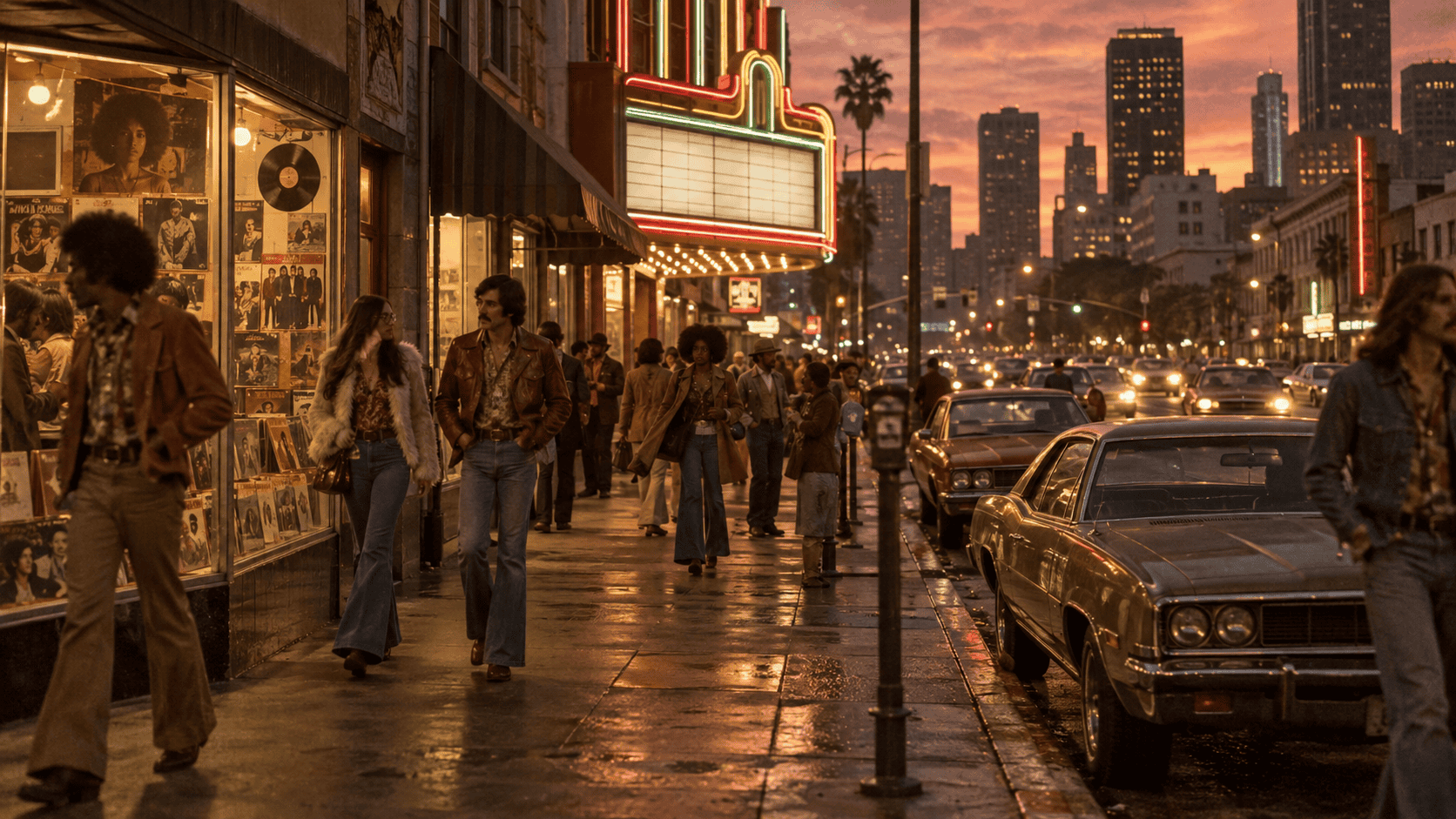
The 1970s opened in the shadow of the turbulent 1960s. The Vietnam War finally ended, Watergate deepened political cynicism, and stagflation challenged the idea of endless postwar prosperity.
At the same time, social movements kept evolving. Environmentalism gained real traction with the first Earth Day, gay rights activism became more visible, and second-wave feminism continued pushing debates about work, equality, and reproductive freedom.
Technology moved in exciting new directions. Personal computing began taking shape, video games entered everyday life, and early mobile-phone development hinted at a future that was only beginning to be imagined.
Popular culture was equally transformative. Disco filled dance floors, punk introduced a rebellious counter-aesthetic, and film shifted between gritty realism and the rise of the blockbuster.
Fashion embraced variety rather than a single uniform look. Platform shoes, bell-bottoms, polyester, bohemian influences, and punk style all coexisted within one strikingly diverse visual decade.
By the end of the 1970s, the Iranian Revolution, the Soviet invasion of Afghanistan, and the Three Mile Island accident pointed toward new anxieties, even as the decade had already reshaped technology, entertainment, and social identity in lasting ways.
Known for
Watergate and the fallout of the Vietnam era permanently altered public confidence in institutions.
Stagflation and the oil crisis brought inflation, uncertainty and a changed consumer mindset.
Earth Day helped move ecological concerns into mainstream public life.
Two radically different music cultures came to symbolize the decade’s variety.
Jaws and Star Wars helped redefine the commercial future of cinema.
Bell-bottoms, platforms, polyester, jumpsuits and earth tones became visual shorthand for the era.
VCRs, calculators, early video games and personal computers began entering everyday life.
The decade encouraged experimentation in style, music, spirituality and social roles.
Track list 01
Political scandal leading to President Nixon’s resignation.
The Fall of Saigon in 1975 marked the end of the long-running conflict.
The early 1970s continued lunar missions and the public fascination with space exploration.
The 1973 oil crisis disrupted energy supplies and shook the global economy.
The late 1970s brought the collapse of one of the century’s most brutal regimes.
The 1973 Supreme Court decision transformed the legal debate over abortion in the United States.
The 1979 partial nuclear meltdown in Pennsylvania intensified fears about nuclear power.
Mao Zedong’s era of upheaval came to a close in 1976.
The 1978 mass murder-suicide shocked the world.
The 1978 peace agreement between Israel and Egypt reshaped Middle Eastern diplomacy.
The 1979 overthrow of the Shah changed the political balance of the region.
Anwar Sadat’s 1977 visit was a historic diplomatic breakthrough.
The 1974 Smiling Buddha test signaled India’s nuclear capability.
The United States celebrated 200 years of independence in 1976.
The 1970 event energized the modern environmental movement.
The 1975 agreements linked European security and human rights.
The 1976 disaster in China became one of the deadliest earthquakes of the century.
Students protesting apartheid in 1976 became a defining symbol of resistance.
The North Vietnamese capture of Saigon became one of the decade’s most enduring images.
Steve Jobs and Steve Wozniak launched a company that would help define the digital future.
Track list 02
Adhesive notes turned a workplace accident into a practical everyday tool.
Motorola demonstrated the first handheld cellular phone in 1973.
Medical imaging advanced dramatically with non-invasive scanning technology.
Electronic messaging began reshaping digital communication.
Local area networking laid the groundwork for modern connected computing.
High-quality electronic printing became increasingly practical.
Portable computing became an everyday convenience.
Magnetic storage became central to early personal computing.
Satellite navigation systems began taking shape.
Electronic image capture appeared well before the consumer boom.
LCD technology opened the path toward flat-panel screens.
Machine-readable retail tracking changed commerce and logistics.
The integrated chip transformed computing power and device design.
New laboratory methods changed the future of biotechnology.
Faster data transmission promised a new communications era.
Home video recording and playback changed domestic entertainment.
The famous puzzle appeared at the end of the decade.
Household safety technology became more widespread.
Advanced medical imaging improved diagnosis and treatment.
The fast-setting adhesive became a practical household staple.
Feature
The culture of the 1970s moved in many directions at once. Disco turned nightlife into a glittering stage, punk stripped music and style down to their rebellious essentials, and blockbuster entertainment changed what mass culture could look like.
At the same time, people experimented with identity, lifestyle, spirituality, and design. Roller disco, CB radio, skateboarding, kung fu, New Age ideas, and celebrity nightlife all helped make the decade unmistakable.
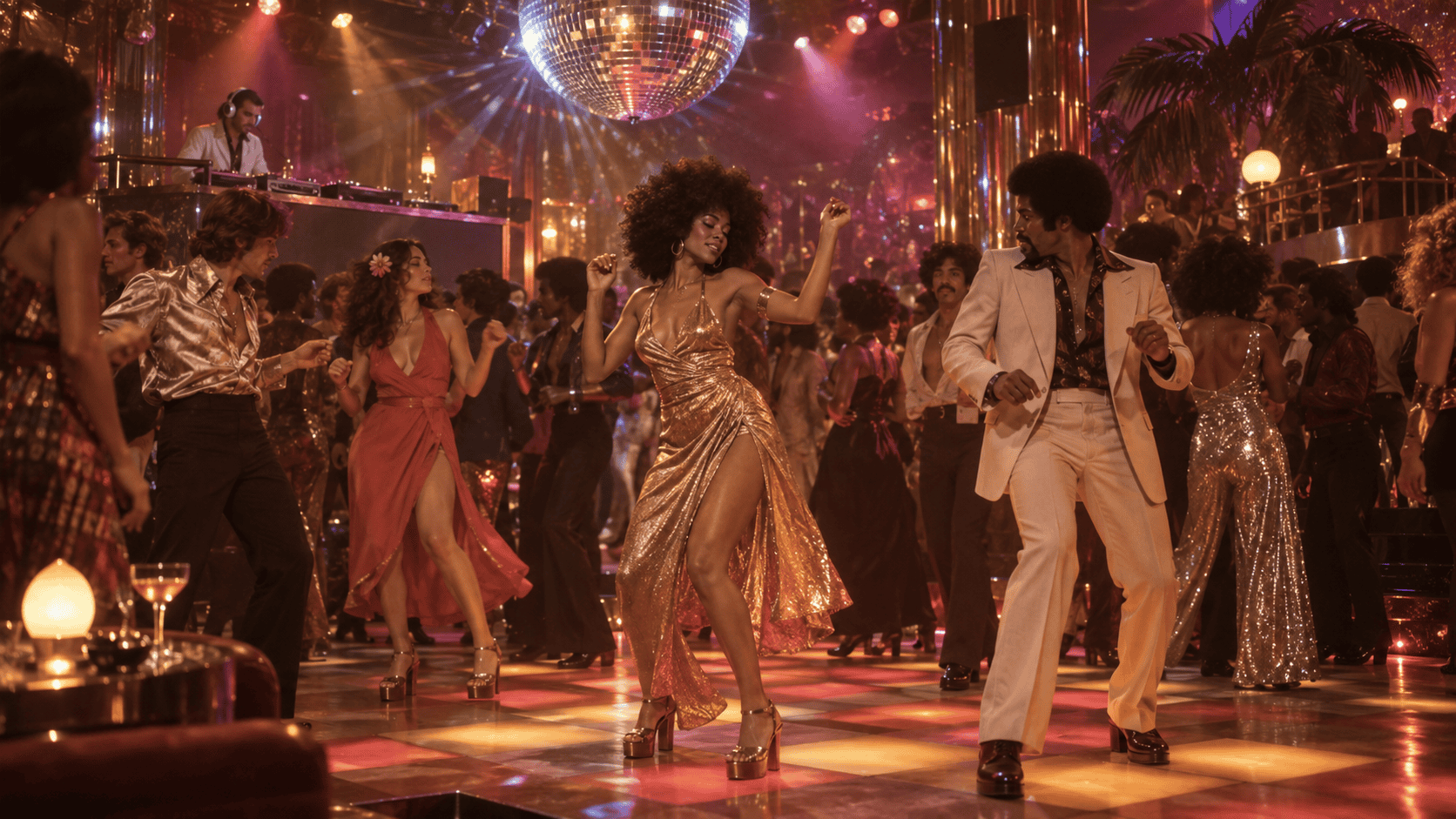
Dance floors, mirrored balls, and club culture became global symbols of the 1970s.
A raw new sound and anti-establishment style challenged mainstream culture.
The blockbuster space saga redefined popular entertainment.
Second-wave feminism pushed debates about equality, rights, and work.
Ecological awareness entered public life with new urgency.
Theatrical performance and flamboyant style blurred fashion and music.
Natural hair became a powerful style statement and marker of pride.
Novelty jewelry captured the playful consumer mood of the decade.
A humorous fad became a genuine commercial sensation.
A strange but memorable public craze briefly spread through the culture.
An emerging youth culture began taking shape.
Truckers and hobbyists turned citizen-band radio into a social phenomenon.
Spiritual experimentation and holistic lifestyles gained popularity.
Black-centered action cinema became one of the decade’s defining genres.
A once-experimental idea became a fashionable home item.
Skating and disco fused into a uniquely 1970s spectacle.
The communal meal became a party classic.
Meditation entered mainstream awareness through celebrity attention.
The New York nightclub became an icon of nightlife and celebrity culture.
Martial arts surged in popularity across television and film.
Mosaic
Financial strain coexisted with artistic energy, nightlife, and reinvention.
Counterculture, LGBTQ+ activism, and social experimentation remained central.
The entertainment industry expanded while the city wrestled with smog and sprawl.
Auto-industry struggles reflected wider industrial decline.
Political turmoil and reform shaped the national mood.
Machine politics and urban power remained highly visible.
The busing crisis revealed deep social tensions.
Cuban influence and rapid growth transformed the city.
Economic setbacks mixed with the early stirrings of a future tech identity.
The city continued growing as a southern business hub.
Oil wealth and NASA helped define the decade locally.
Casinos and tourism expanded the city’s identity.
The Bicentennial brought national attention and civic energy.
Tourism and music helped sustain a distinctive cultural life.
Corporate growth and the arts scene gained momentum.
Environmental politics and the energy industry shaped local debates.
Urban planning and alternative culture became part of the city’s character.
The steel city faced industrial decline and economic transition.
Country music grew even more influential.
Military presence and emerging biotech activity supported expansion.
Style file
1970s fashion was unusually plural. The same decade made room for disco glamour, easy casual wear, bohemian layering, earthy everyday clothing, and the sharp aggression of punk.
Platform shoes, bell-bottoms, polyester, jumpsuits, wrap dresses, maxi dresses, and large collars all helped build one of the most recognizable silhouettes in twentieth-century style.
Wide-legged trousers became one of the most recognizable silhouettes of the decade.
Thick soles and extra height defined both glamorous and casual looks.
Colorful patterns carried over the free-spirited mood of the era.
Ultra-short shorts became a bold fashion statement.
Casual businesswear reflected shifting office and nightlife style.
Loose embroidered tops fit the bohemian side of 1970s fashion.
Diane von Furstenberg’s design became a modern wardrobe classic.
The synthetic fabric became nearly unavoidable in everyday clothing.
One-piece outfits crossed into daywear, nightlife, and stage fashion.
Long flowing dresses captured the decade’s relaxed mood.
Textured fabric became common in jackets and pants.
Leather, studs, and safety pins pushed style into open rebellion.
Bare shoulders and necklines were a signature look.
Warm browns, rust, olive, and mustard dominated color palettes.
Facial hair became a major part of masculine style.
Free-spirited dressing remained an influential fashion current.
Wood-soled footwear moved into mainstream wardrobes.
Shirt collars grew larger and more dramatic.
Blanket-like layering captured a casual handmade mood.
Accessories became part fashion statement, part playful novelty.
Screen
The decade changed cinema. Gritty crime stories, horror classics, personal filmmaking, and the modern blockbuster all developed side by side.
These films helped define how audiences remember the 1970s and how Hollywood evolved afterward.
The epic crime drama became one of the defining films of the decade.
The thriller helped create the modern summer blockbuster.
Science fiction became a mass cultural obsession.
The film brought psychological conflict and institutional critique to a wide audience.
Its dark portrait of New York captured urban alienation.
Supernatural horror reached an unprecedented cultural intensity.
The Vietnam War became the setting for a hallucinatory cinematic epic.
Romantic comedy grew more neurotic, modern, and self-aware.
The underdog boxing story became an instant favorite.
Science fiction and horror fused into one of the decade’s strongest films.
Neo-noir storytelling flourished.
The war drama explored trauma and dislocation.
Disco culture exploded on screen.
Nostalgia for the 1950s became a hit musical phenomenon.
Wonder and mystery defined a new kind of sci-fi spectacle.
The chaotic bank-robbery story reflected the decade’s gritty realism.
Dystopian provocation made a lasting impact.
Gritty police thrillers gained prestige.
The superhero movie entered a new era.
Absurdist comedy found a massive audience.
Sound
Few decades sound as instantly recognizable as the 1970s. Dance music, singer-songwriters, punk, soft rock, reggae, heavy metal and experimental forms all expanded what popular music could be.
Radio, records, clubs and arena concerts made the decade’s music culture both massive and highly varied.
Dance music defined nightlife and pop culture.
The rebellious style of the Sex Pistols and Ramones altered the direction of rock.
Ambitious concept albums and long compositions pushed rock outward.
Style, identity, and theatrical performance fused together.
The groove-heavy sound of artists like James Brown remained essential.
Personal and introspective songwriting reached a broad public.
Harder and darker rock sounds gained devoted audiences.
Bob Marley and others brought Jamaican music to a global audience.
Guitar-driven bands linked rock with regional identity.
Experimental ambition became part of popular music.
Polished melodic songs dominated radio.
The Detroit sound remained an influential force.
German electronic and experimental music expanded the boundaries of sound.
Post-punk energy pointed toward the next decade.
Genres blended more freely than ever.
Jazz merged with rock, funk, and electric experimentation.
Orchestral rhythm and blues reached a sophisticated peak.
Smooth soft rock became one of the era’s most recognizable sounds.
Artists like Iggy Pop helped lay the foundation for punk.
Willie Nelson and others pushed country toward a rougher independence.
Road and home
Cars remained central to the decade’s identity, but the 1970s also forced a rethinking of performance, size, fuel economy, and style. Muscle-car energy survived, yet oil shocks and changing tastes pushed the market in new directions.
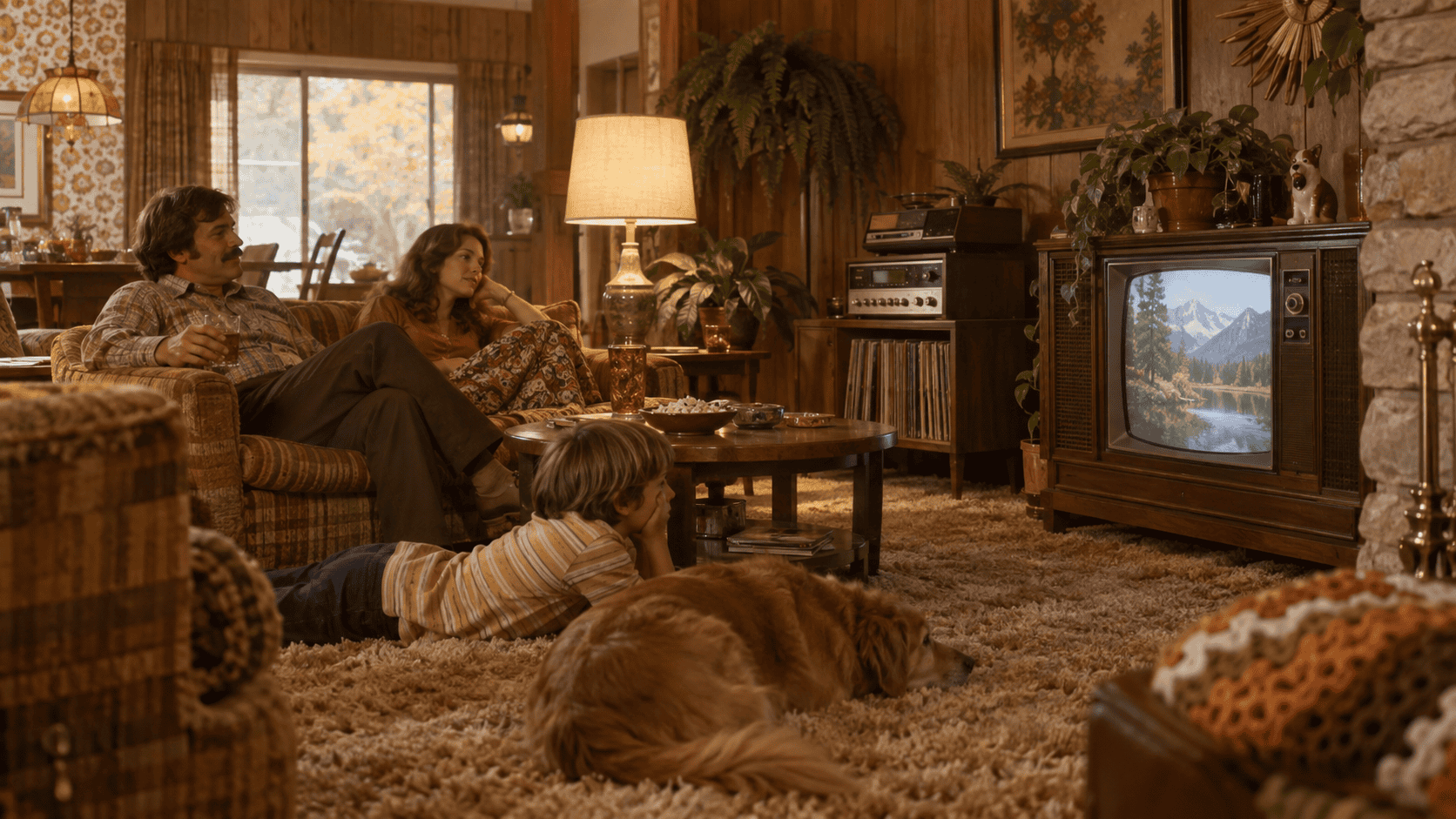
At the same time, everyday home life increasingly reflected the decade’s character through television, stereo systems, soft furnishings and a warm earth-tone palette.
A compact car remembered as much for controversy as for affordability.
The muscle-car spirit survived into the 1970s.
The distinctively styled subcompact became a memorable oddity.
Performance styling turned it into a lasting icon.
The hatchback became one of the decade’s most influential practical cars.
Japanese performance cars gained new respect.
Its wedge-shaped design became a supercar legend.
Fuel efficiency became a stronger selling point.
Luxury and open-top touring remained aspirational.
Its wide, rounded shape made it instantly recognizable.
Turbo performance became part of automotive fantasy.
Large American luxury still had a place in the decade.
The downsized pony car reflected changing priorities.
Compact sport sedans built a new enthusiast audience.
Muscle-car competition remained a major theme.
The Soviet off-road vehicle gained a durable reputation.
Italian sports-car styling stayed as desirable as ever.
The personal luxury coupe appealed to mainstream buyers.
Japanese sporty coupes gained wider popularity.
Big, plush American luxury closed the decade in style.
Legacy
The 1970s still matter because they changed the way modern life looked, sounded, and felt. The decade reshaped politics through distrust and reform, transformed culture through disco, punk, and blockbuster cinema, and introduced technologies that would become part of everyday life.
It also normalized experimentation. In fashion, music, media, social identity, and home design, the 1970s encouraged people to live more openly with contradiction and personal style.
Many trends that define later decades, from digital communication and home electronics to lifestyle branding and celebrity-driven entertainment, took visible shape in the 1970s.
Questions
The decade is remembered for Watergate, the end of the Vietnam War, the energy crisis, environmental activism, disco, punk, blockbuster movies, and the rise of personal technology.
The 1970s inherited the social upheavals of the 1960s but filtered them through political distrust, economic strain, and a broader mix of lifestyles and cultural identities.
Disco, punk, funk, progressive rock, reggae, soft rock, heavy metal, and singer-songwriter music all shaped the decade’s sound.
Fashion became more individualistic, with bell-bottoms, platform shoes, jumpsuits, wrap dresses, earth tones, punk style, and bohemian looks all coexisting.
The microprocessor, email, Ethernet, GPS, mobile-phone development, digital imaging, and MRI technology all had long-term impact.
Films of the decade helped create the blockbuster, deepened gritty realism, expanded genre cinema, and changed how directors approached storytelling and style.